
How to Transport a Decorated Cake Safely
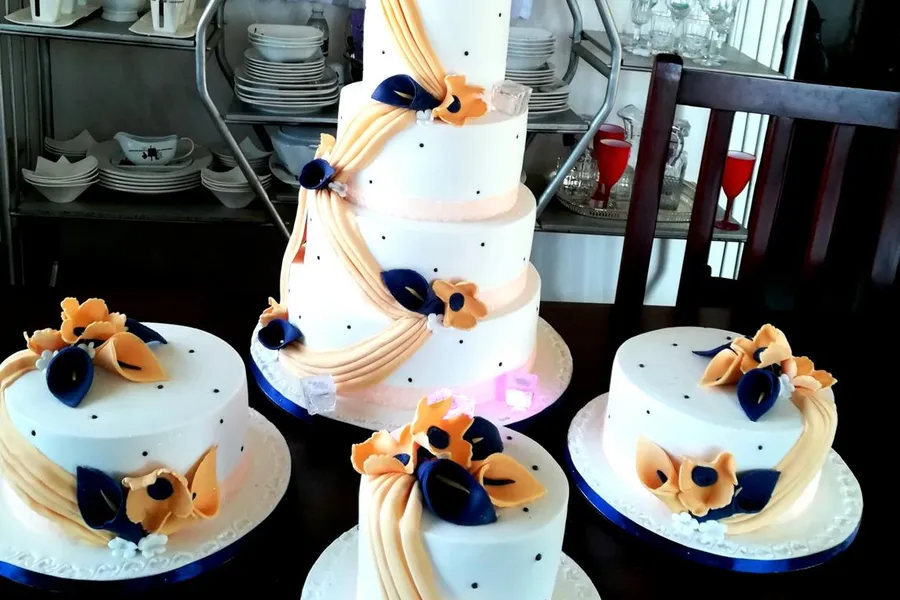
A decorated cake takes hours to make and minutes to damage. Most transport problems come from heat, a surface that tilts, sudden stops and a box that is too big or too small. With some preparation, most cakes travel well.
Different cakes, fillings and journeys carry different risks, so take extra care with tall, tiered or delicate designs, and ask the cake maker for advice if the cake is a special order.
Before you go
- Chill the cake first. A cold, firm cake handles movement much better than a soft one. If the cake contains perishable fillings such as fresh cream, custard or cream cheese, it should be kept chilled anyway; see how to store a birthday cake.
- Use a sturdy box. The box should be slightly larger than the cake base, with enough clearance above any tall decoration. Choose a box with stiff sides that won’t flex.
- Secure the cake board. Put a non-slip mat or a damp cloth under the cake board inside the box so it cannot slide.
- Remove fragile decorations that can be added at the venue, such as tall toppers or delicate flowers, and pack them separately.
- Plan the route and timing. Aim for the shortest, smoothest journey and leave plenty of time, so you aren’t rushing round corners.
Packing the car
- Use a flat, level surface. The floor of the passenger footwell, or a non-slip mat in the boot, is usually better than a seat, which slopes backward.
- Keep the cake out of the sun and away from heater vents.
- Cool the car before loading, if it is warm.
- Stop it from sliding. Wedge the box with rolled towels or non-slip mats so it can’t shift, but don’t squash it.
- Don’t stack anything on or against the box.
Driving
- Drive slowly and smoothly. Accelerate and brake gently, and take corners and speed bumps slowly.
- Avoid sudden stops, which can send a cake sliding or tilting.
- Ask a passenger to steady the box if the cake is tall and delicate, and they can do so without gripping it.
- Don’t leave the cake in a parked car, especially in warm weather. A closed car can heat up quickly.
Hot weather
Heat is the biggest threat to buttercream and many other finishes. South African summers can soften buttercream quickly, cause it to slide or sag, and make perishable fillings unsafe.
- Chill the cake thoroughly before leaving.
- Cool the car beforehand and run the air-conditioning.
- Keep the journey short and go straight to your destination.
- On arrival, put the cake in a cool room, or the fridge if it has a perishable filling and there is space.
At the venue
- Choose a sturdy, level table away from sun and heat, and check it doesn’t wobble.
- Unbox it carefully, lifting by the board or base, not by the cake itself.
- Add the toppers last.
- Keep it cool until serving.
If something goes wrong
Small problems can often be fixed:
- A smudge: chill the cake, then smooth the area with a warm spatula.
- A broken or fallen decoration: reattach it with a little buttercream, or leave it off.
- A lean: chill the cake, then gently straighten it, though a serious lean in a tall cake is hard to correct.
If a cake with a perishable filling has been out in the heat for an extended period, throw it away rather than risk it.
Related guides
Smooth, well-chilled finishes travel better; see how to get smooth buttercream on a cake and how to level and stack cake layers. Planning a big celebration? Choose the right cake size before you order.
Frequently asked questions
Where in the car should a cake go?
On a flat, level surface that doesn't tilt, usually the floor of the passenger footwell or the boot on a non-slip mat, rather than on a seat, which slopes backwards.
Should I put the air-conditioning on?
In warm weather, yes. Cooling the car before the cake goes in helps buttercream and other soft finishes stay firm.
Keep reading
 Cake Storage & Care
How to Store a Birthday Cake Correctly
How to store a birthday cake safely and keep it fresh: buttercream, fresh cream, custard and cream cheese fillings, fridge versus room temperature, and serving. Frosting, Fillings & Decorating
How to Get Smooth Buttercream on a Cake
A step-by-step guide to a smooth buttercream finish: preparing the cake, the crumb coat, tools, chilling and fixing air bubbles, ridges and a streaky finish. Baking Techniques & Troubleshooting
How to Level and Stack Cake Layers
How to trim, level and stack cake layers so the cake sits straight: tools, cooling, filling, dam technique and fixing a leaning cake. Celebration Cake Planning